I built mine first. Now I'm here to make the AI you've already built answerable for itself.
Quantum Beard exists because the market is normalizing AI systems that sound right, hide their reasoning, route around their own guardrails, and leave humans holding responsibility without actual control. That's the gap I work in.
What this is
Quantum Beard is a focused practice for governing AI systems that are already in production — making them reviewable, traceable, and structurally honest about what they're doing. The work runs along a sequence: inspect what you built, govern what it knows, redesign what became quietly wrong, then build strategic advantage from a system you can actually see into.
It is deliberately not: a prompting practice, an AI-literacy practice, a generic "AI transformation" practice, or a thought-leadership outpost. There are good people doing all four of those things. This isn't one of them.
What's here is one operator's stake on the part of the problem that's getting normalized fastest and explained least: hidden wrongness — silent inaccuracy, ungoverned retrieval, unreviewable reasoning — inside the AI systems organizations are already shipping. The work meets that head-on.
The doctrinal underlayer for all of it lives at Governance — the public articulation of what this work assumes about judgment, evidence, and responsibility before any of it touches your system.
Why this exists
The AI industry has spent the last few years getting very good at one thing: producing output that sounds like the answer. It has not spent comparable energy on whether that output is correct, where it came from, or how a human is supposed to oversee it once the system is operating at scale.
That gap is being papered over with confidence. The cost shows up downstream — in decisions that can't be defended, retrievals that can't be audited, and reasoning paths that can't be reconstructed. By the time anyone notices, the damage has been moving for a while.
Quantum Beard is what happens when someone takes that problem personally instead of treating it as discourse.
Who's behind this
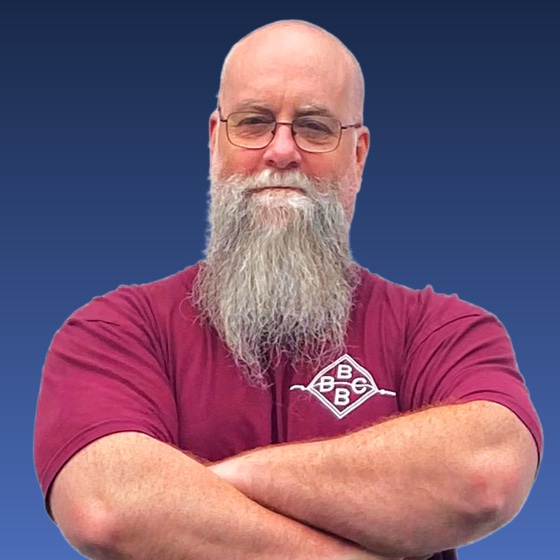
Quantum Beard is built and run by me — Ken Jensen. One operator, not a studio, not a rebranded agency.
Over the last year and a half, I've built a governed multi-agent operating environment — retrieval discipline, durable memory, audit surfaces, and human judgment wired in as authority rather than decoration — and I run it every day as my own working infrastructure. Odin, the routing intelligence that meets you at this estate's front door, is part of that machinery, not a demo built for the website. When I describe a failure mode, it's because I've seen it in the wild — including in my own builds, and including in mine first.
That timeline is stated plainly on purpose. The credibility here doesn't rest on years claimed — it rests on a working system you can walk up to and talk to, and on work that holds up under inspection.
My role in the work mirrors my role in the system: the machinery executes and the estate delivers, but meaning, approval, and exceptions stay with a human who can be named. When you engage this practice, that's who's accountable.
That's the lane. Serious operator, weird brand. The beard is real. The work behind it is more serious than the wordmark would suggest, which is deliberate — I'd rather be underestimated by people who don't read carefully than mistaken for the consultancy down the street.
What's actively in build
- Quantum Beard — the practice itself: diagnostic, review, and redesign work for organizations already running AI in production.
- The Verse — a governed operating environment for human-AI collaboration, built around legibility, retrieval discipline, and durable memory. The same architecture I use to do the work is the architecture I'm shaping into a broader product.
- The Assured AI — a continuity channel for serious operators: structured field notes on hidden wrongness, governance patterns, and what's quietly changing in how AI systems get built and broken.
The bigger bet
The future doesn't belong to the smartest model or the slickest interface. It belongs to the organizations whose AI systems can be reviewed, defended, and trusted — by their own people, by their customers, by their regulators, and by whatever comes next.
That kind of system isn't built by accident, and it doesn't survive contact with reality unless someone designs for governability from the start. That's the work.
If your AI is doing something you can't fully explain — and you've started to suspect the explanation matters — that's where this starts.